Booking.com
Helping one of the world's largest travel brands validate its next big bet, the "Connected Trip", in seven weeks: a Vision Sprint, a clickable AI prototype, and a 1,026-person study to steer a multi-billion-euro strategy.
A note on confidentiality
Booking.com's new strategy is expected to go public in summer 2026. Until then, this case study focuses on how we worked and the value it created, rather than the specifics of what we found. Screens shown are from the concept prototype.
Overview
When the stakes are worth billions, you validate before you build.
One of the world's largest travel brands turned to BeTheLeap, a boutique Berlin studio, to pressure-test the strategy behind its "Connected Trip" vision: an AI-powered companion that helps travellers plan, book, and manage an entire trip in one place, rather than booking each piece separately.
In seven weeks we had to give leadership the clarity, alignment, and confidence to commit. Fast, collaborative, and evidence-led, designed to de-risk a multi-billion-euro decision before a line of it was built.

The challenge
A category leader without a sharp answer to "why us?"
Booking has enormous scale, but across leadership one tension kept surfacing: no clear, memorable differentiator, and a looming question about what travel looks like in the age of AI.
- No clear differentiator, "why come to Booking?" was missing from the traveller's mind
- A fragmented experience and misalignment across teams and verticals
- AI-first competitors threatening to reduce Booking to an API in someone else's product
- A broad, undefined customer, from family summer breaks to couples' city trips
- A multi-billion-euro bet that needed evidence before anyone committed
Travelling is magic, but organising it isn't. Booking's job was to take away the stress, and prove it could, before a more agile competitor did.
The approach
Three intense phases, one week to prove the idea.
I worked as part of the BeTheLeap team, facilitating and designing across a Discovery Workshop, a five-day Vision Sprint, and research at scale, embedded with Booking's leadership at their Amsterdam HQ throughout.
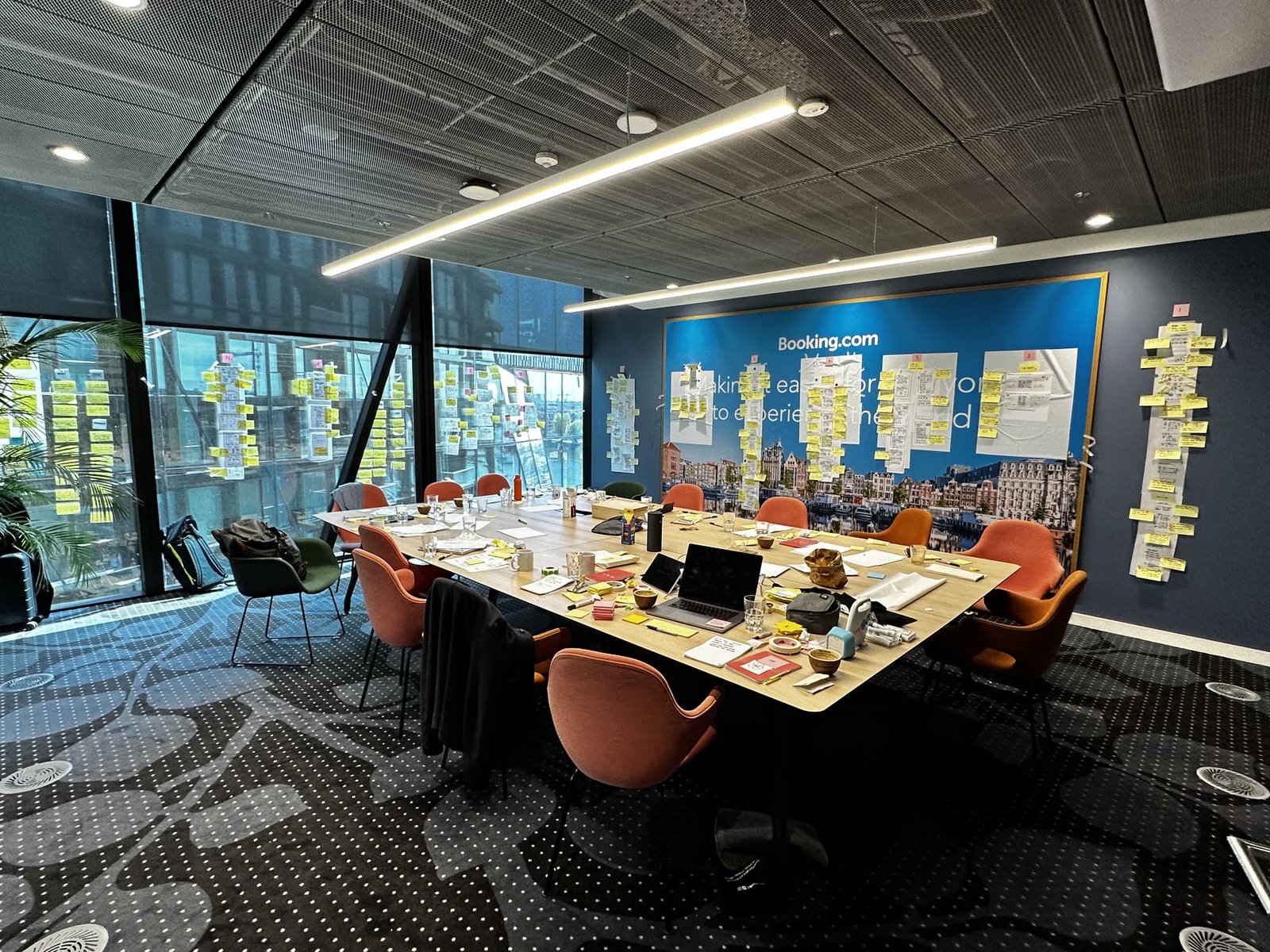
Discovery Workshop
Aligned leadership on what the Connected Trip is and isn't. Defined the Promise / Intent / Trust lenses, mapped the real problems into How-Might-We statements, and assigned owners to the hard questions.
Vision Sprint, 5 days
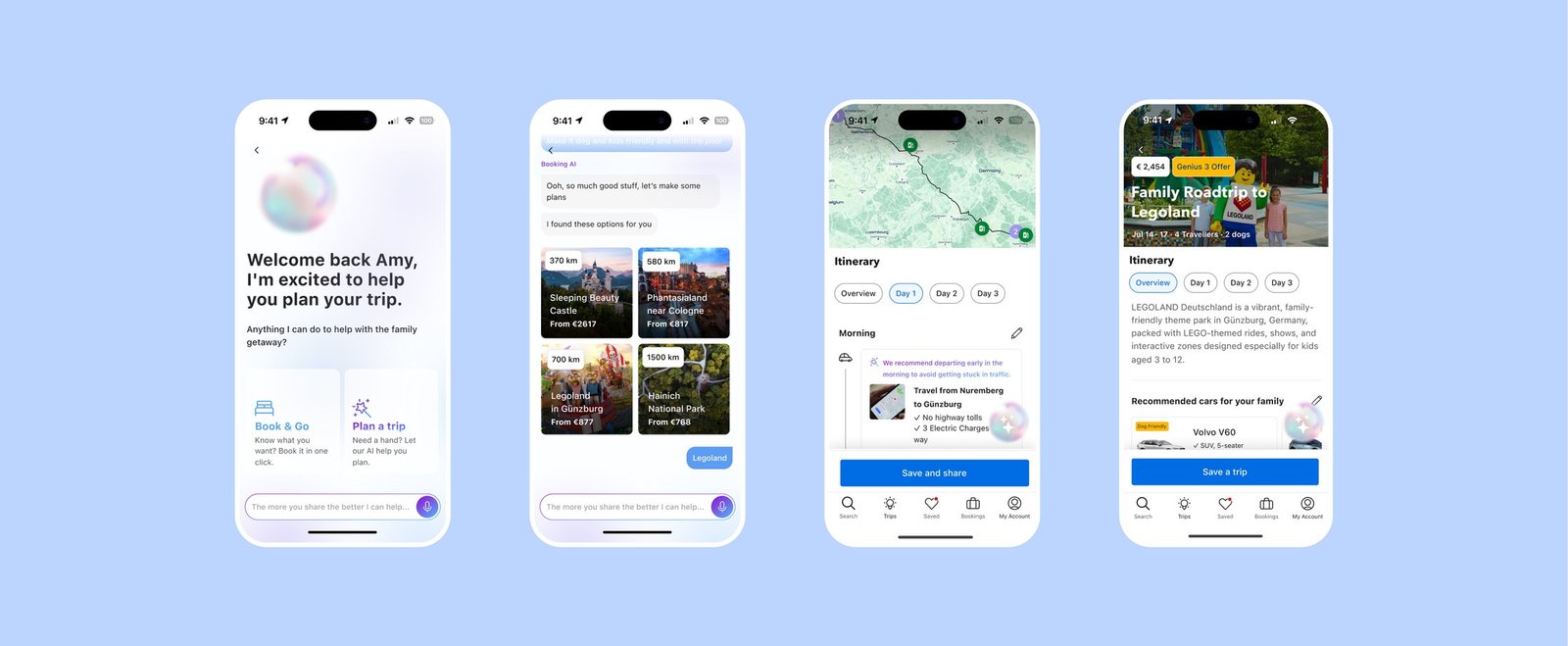
Sketched, storyboarded, and built a clickable AI-planner prototype of the customer promise, from inspiration, to booking, to support when a trip goes sideways.
Research at scale
Pressure-tested the concept with 10 in-depth interviews and a nationally representative 1,026-person quantitative study, designed, fielded, and analysed inside the sprint window.
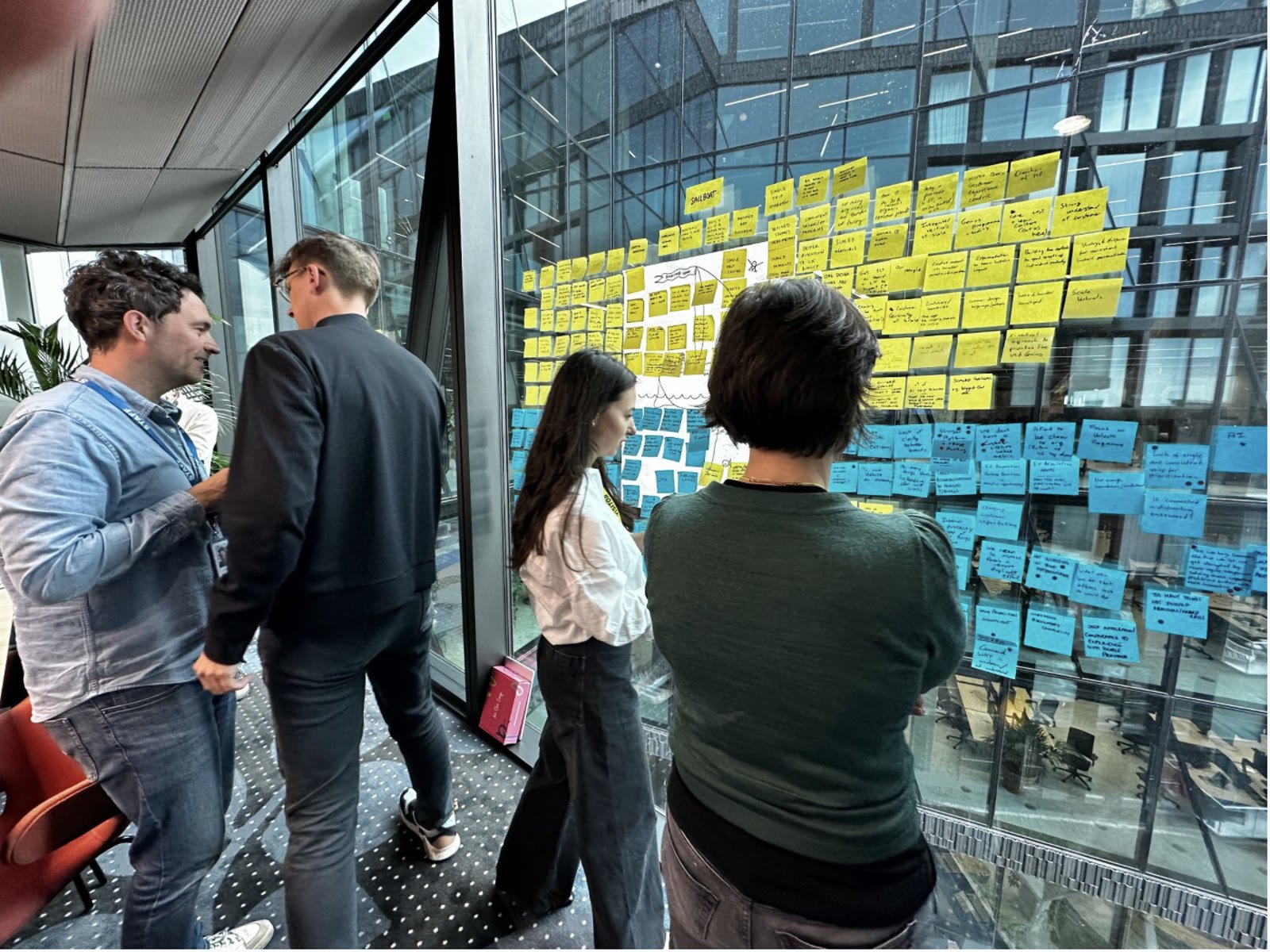
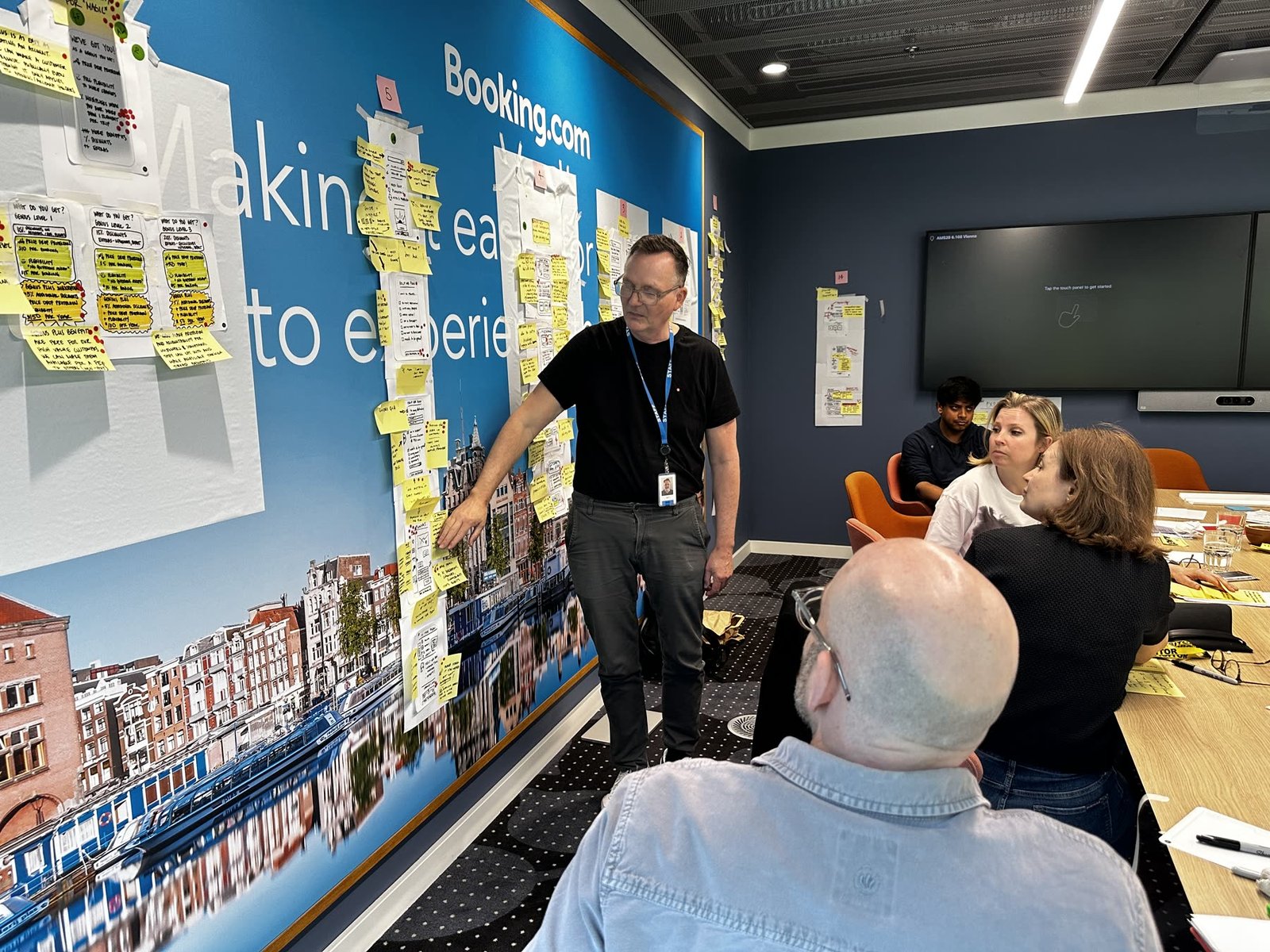
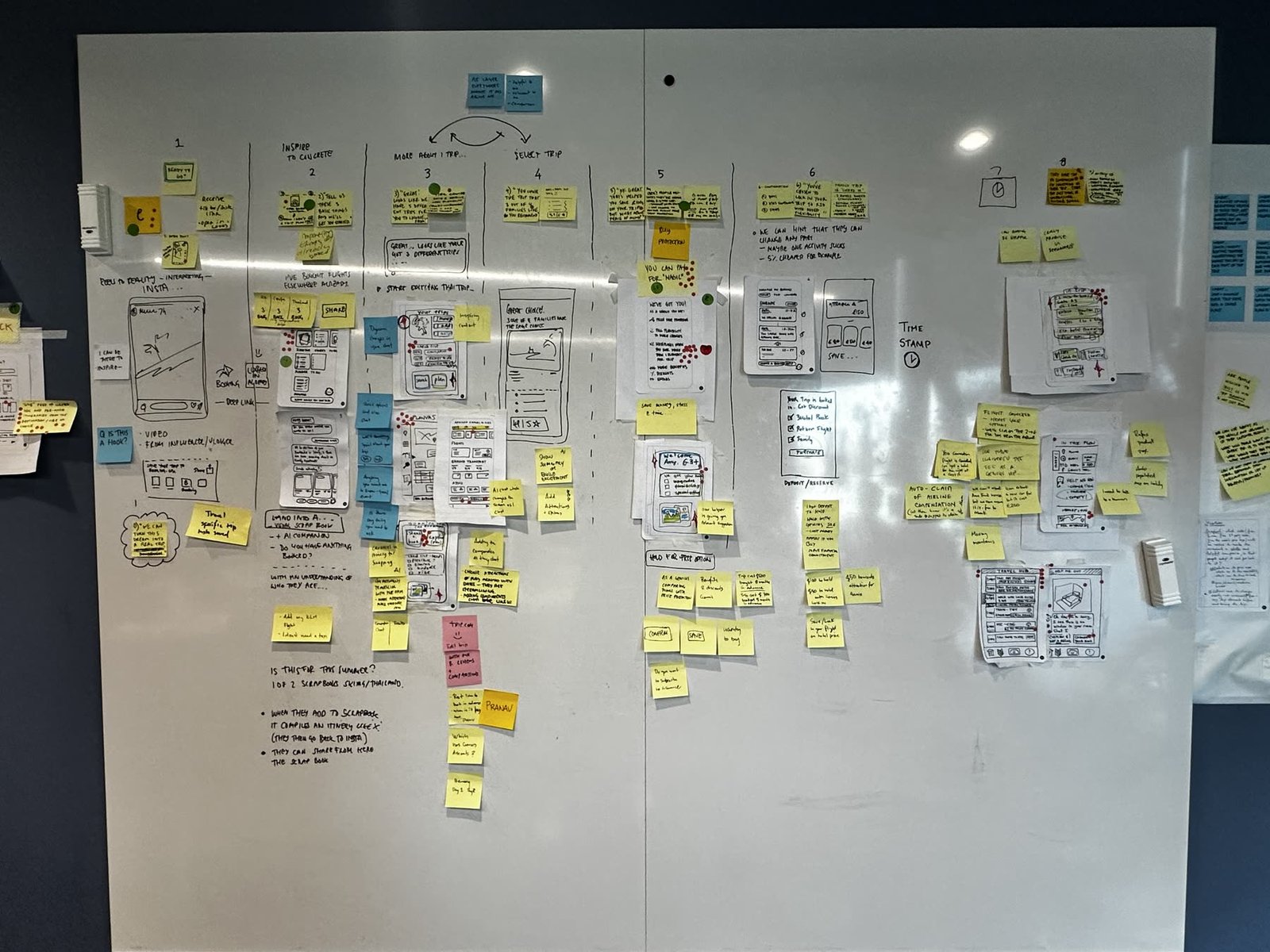
Mapping problems and value with Booking's leadership (left); walking the team through the concept storyboard (right).
Aligning on the vision
First we defined what the Connected Trip is, and, just as importantly, what it isn't.
Before designing a single screen, the workshop forced sharp scoping calls. Naming what the product wouldn't be is what kept a broad, ambitious vision executable, and let the sprint move fast.
It is
- An app that knows you, and helps at every step: planning, booking, and managing the trip
- The most personal way to find and book any part of a trip, at a great price
- A companion that has your back when things go wrong, no questions asked
- Proactive: it anticipates needs, and recognises you for your loyalty
It isn't
- A turnkey, end-to-end tool that removes you from the decisions you enjoy
- Always the lowest price, or a pushy sales agent
- Just a collection of separate travel products bolted onto one platform
- A system that upsells you, or removes the human touch of hosts and partners
The framework
Promise, Intent, Trust, three lenses to build the strategy against.
Rather than jumping to features, we anchored every decision to three questions. They kept a broad, ambitious vision honest, and gave leadership a shared language.
Promise
Travellers know why to come to us over anyone else. What are we offering that no one else can match?
Focus: vision & differentiation
Intent
Travellers feel we're at their side and have their best interest at heart. Are we designing what travellers actually need?
Focus: experience & design intent
Trust
Travellers can count on us to get the basics right. Which moments must we nail before people trust us with the whole trip?
Focus: core features & jobs
What we prototyped
A clickable answer to "why Booking?"
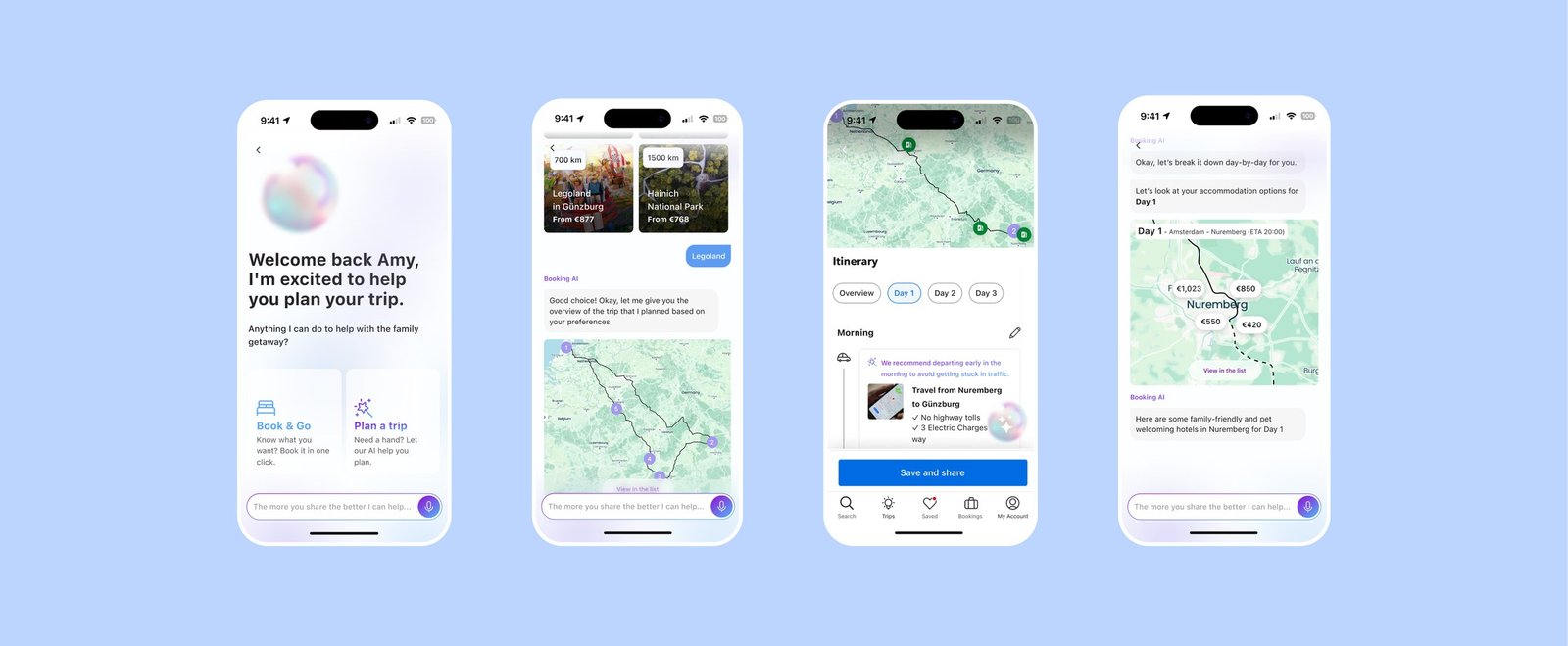
An AI companion that turns intent into a plan
The prototype opens by getting to know the traveller, then turns a loose brief, "dog- and kid-friendly, with a pool", into bookable options. Crucially, framed as suggestions to build on, not a fixed plan to accept.
The whole trip, connected in one place
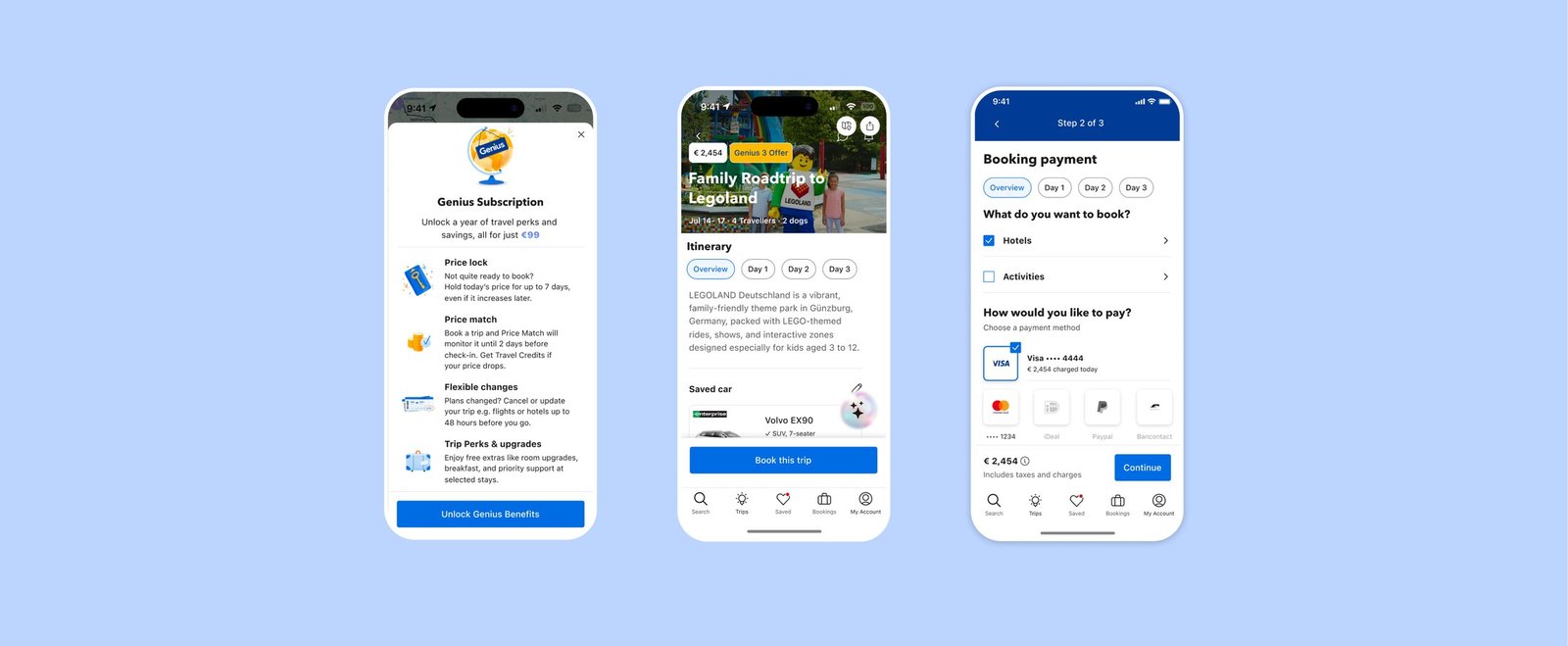
A living itinerary stitches accommodation, transport, and activities into one view, right through to a single checkout, with proactive in-trip guidance for the moments when plans change.
But for travellers to book the whole trip through Booking, and not just one leg, they had to trust it. So the Genius loyalty programme was reframed as a cross-vertical thread of trust and care, rather than a discount bolted on. Testing was blunt here: a hard subscription upsell dented trust. The design instead leans on genuine, surprise-and-delight value and support, earning the whole trip rather than pushing for it.
Testing & validation
Bringing data to a billion-euro question.
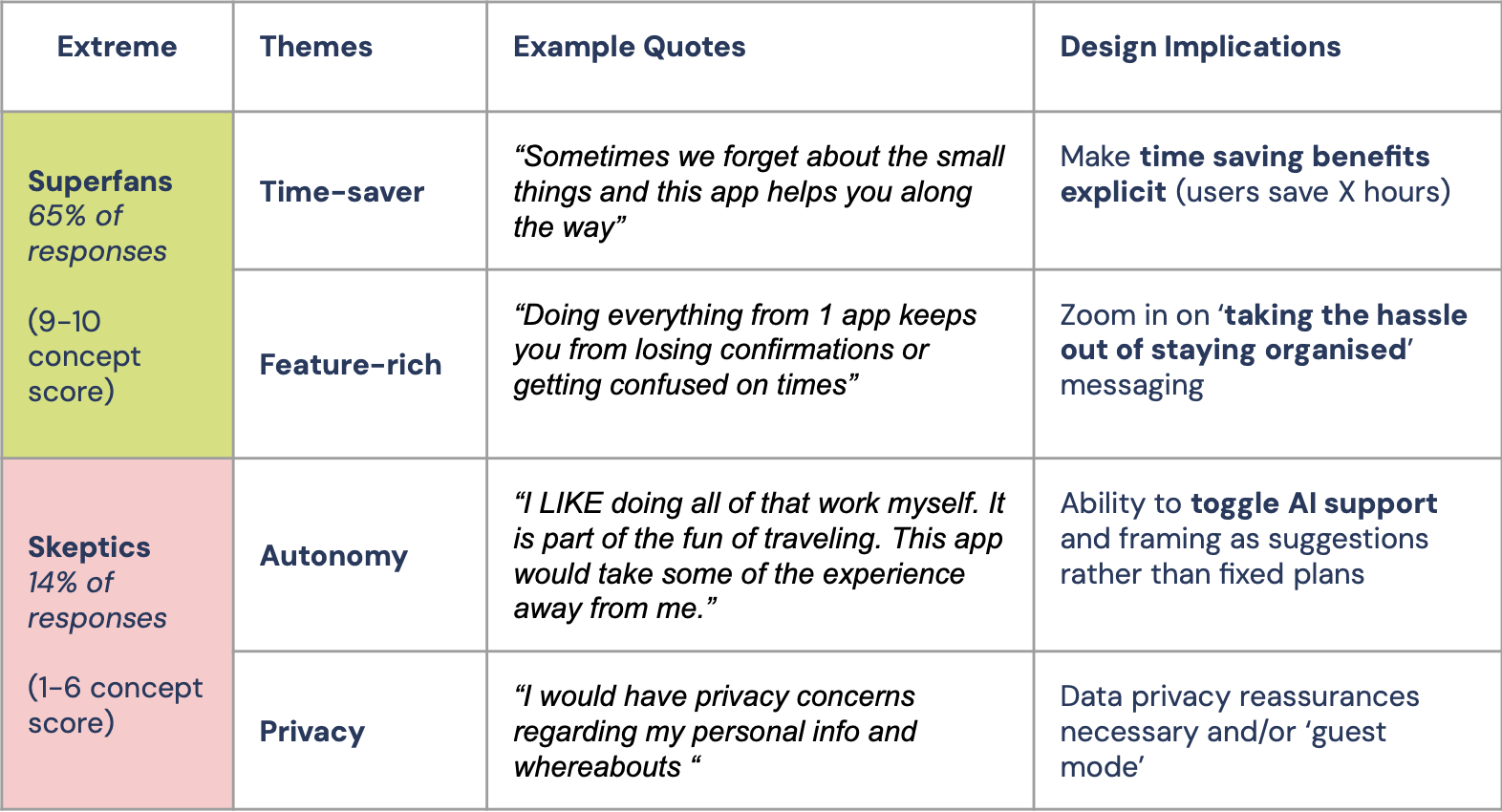
A vision only counts if the numbers back it. Alongside 10 in-depth interviews, a nationally representative 1,026-person study pressure-tested the concept, and, crucially, whether travellers valued it as one connected proposition across every vertical, accommodation, flights, cars, and activities, rather than a set of separate products.
The result was an evidence base that showed leadership where the whole-trip promise resonates, which moments earn trust, and where features like the Genius subscription needed a rethink, so the strategy could move forward on data, not opinion.
AI can handle the plan. In the moments that matter most, people still want a human. The Connected Trip marks a shift from travel aggregator to travel operator, and that human safety net is the real differentiator.
Outcomes & impact
Leadership aligned around one clear articulation of the Connected Trip, what it is, and what it isn't
The three riskiest assumptions, AI displacement, brand stretch, and the customer promise, tested against real evidence
A clickable prototype that turned an abstract vision into something leaders and travellers could react to
A validated window of opportunity: travellers aren't yet planning with AI, but the appetite is, now is the time to shape it
The clarity, alignment, and confidence to move the strategy forward, in seven weeks
“This is an idea that should be set in stone! It would take a lot of pressure off my shoulders when booking my trips. Please do make this happen!” Study participant
← Back to selected work